Continuous production of crops with chemical inputs often results in a decline in soil physical properties leading to low crop productivity. Integrated Farming System (IFS) aims at productivity, sustainability and profitability by judiciously combining all the components including crop and animal enterprises in agricultural farms. In IFS, output of one enterprise becomes the input fix another enterprise. In addition, single enterprise has a high risk of failure due to a range of factors (i.e. insects, disease, drought, etc.) and exposes farmers to a high degree of variability with respect to crop yields and income.
IFS is a system approach which paves way for the maximum utilization of on-farm resources and minimum use of off-farm inputs. The components chosen are inter-linked and interdependent so risk involvement is less in IFS as compared to a single enterprise.
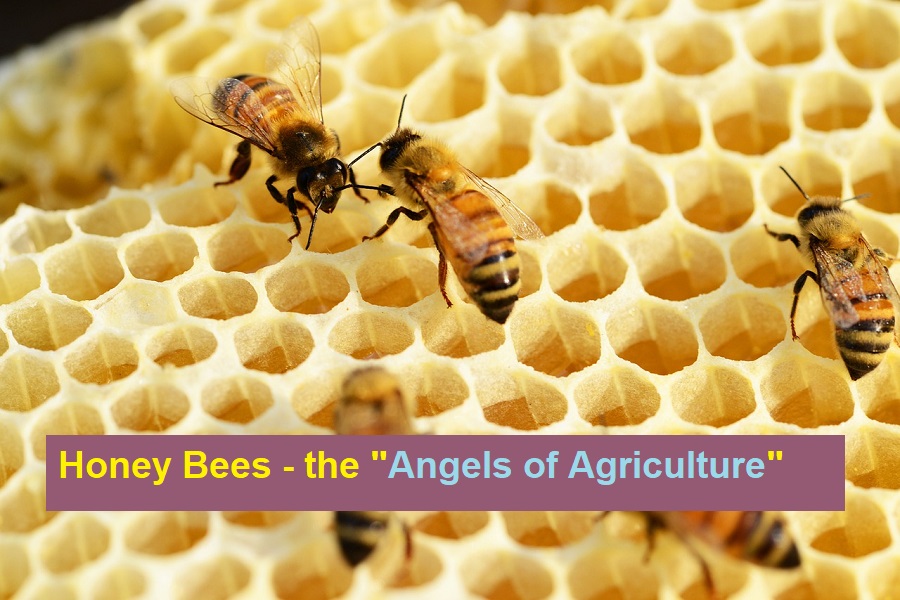
Beekeeping in IFS: Honey bees are primarily instrumental in increasing the productivity of agricultural crops manifold though cross-pollination, and therefore honey bees are called ‘angels of agriculture’. Apiculture fits very well with the concept of Integrated Farming System because IFS is an eco-friendly low input organic fanning that is highly favorable for beekeeping, which helps in realizing higher crop productivity. It has been estimated that the value of increase in crop yields through pollination is 15-20 times more than the value of honey produced by honey bees. Mutualistic relation-ships exist between bees and crops, makes apiculture an ideal component in IFS. Crop pollination requires a large population of bees during the brief blooming period of each crop and honey bees are one of the few potential pollinators that can be cultured in large number. Beekeeping does not take up any extra land and it does not compete with other enterprises for land.
Loss of native bees as a result of habitat destruction, insecticide impact and lack of diversity in monocultural systems necessitate the inclusion of apiculture as a vital component in IFS.
Yield potential of a cross-pollinated crop can be achieved only when the pollination requirement of the crop is fulfilled. Successful pollination is essential for the economic production of agricultural and horticultural crops. Farmers can grow the best genetic stock and provide the best agronomic if adequate pollination is not achieved.
Bee pollination can substantially increase fruit size and quality resulting in higher yields and profits to growers. Honey bees are primary insect pollinators. They are highly dependable, the most efficient domesticated pollinators of crops grown under IFS. Their hairy body is highly equipped to carry pollen efficiently. They are generalist foragers and they visit and pollinate a large number of crops. Bees work constantly on a crop until the flowering period is over. Healthy bee colonies produce massive brood. The large number of developing larvae is to be fed with protein rich pollen. Hence, honey bees place a high priority for pollen collection making them effective pollinators.
Management of apiary in IFS: Moisture availability in soil mainly decides the nectar output from crop plants which in turn decides the honey production and survival capacity of bees. Domesticated bees like hive bees are fit for inclusion under IFS. Generally, Indian bees are well suited in IFS. Choice of honey bee species varies according to the crops chosen like in mango stingless bees are more efficient pollinators. Beekeeping can be started with a minimum of two bee colonies to start with for a year and after assessing the beekeeping potential of the area and gaining good experience more colonies can be added. Practical training on beekeeping is essential to alleviate the fear about bees and to master proper handling and colony management skills.
Pesticide usage has to be minimized as bees are highly susceptible to insecticide. Rural women can also be trained to take up bee husbandry in their IFS.
Economics of bee colonies in IFS: Beekeeping is an economic enterprise that requires less investment and space. Investment is required only in the first year when the system is installed. There will be a net profit of Its 12,000 to 16,000 per year for every four bee colonies (small unit). One can go on multiplying bee colonies at least two times a year and sale one-third of the colonies at Its 800 per colony. Four kg of bee wax out of 4 colonies will earn Its 400 per year. Bee wax is extensively used in cosmetic (lipstick) and leather industries beside its use in scientific laboratories. Comb foundation sheets made of bee wax can be sold at Its 150 per kg. Pollen can be collected by pollen trap at 1 kg per 4 colonies per year.
It can be sold as bee food that can provide Rs. 400 as additional income. From four colonies, the honey availability per year will be 60 kg and one can earn Rs. 9,000.
Hive products like honey, pollen and propolis obtained through beekeeping carry additional income for fanners. Apiculture also generates employment opportunities. Hence, beekeeping should be included as a component in IFS to boost up crop productivity. Different government and non-government institutions, including KVKs under Assam Agricultural University, are imparting training and demonstration on scientific bee keeping techniques so that our fanners can go for apiculture as an enterprise to generate additional income.
Article Contributed by : Dr. D Sharma & Dr. A Khound
